•  
31st anniv. of Great Hanshin Earthquake

31st anniv. of Great Hanshin Earthquake

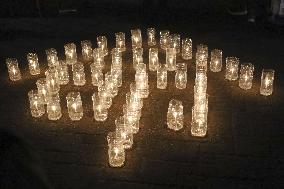
Forty-nine candles are lit at a park in Amagasaki, Hyogo Prefecture, on Jan. 17, 2026, creating a Japanese "kanji" character meaning "life" as the western Japan city and its surrounding areas mark the 31st anniversary of the 1995 Great Hanshin Earthquake that killed over 6,400 people, including 49 in the city.

  •  

[Breaking News]Kanji for "bear" chosen as best to characterize 2025

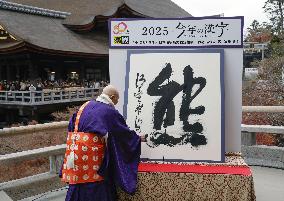
KYOTO, Japan, Dec. 12 Kyodo - Seihan Mori, chief Buddhist priest of Kiyomizu temple in Kyoto, writes the kanji character "kuma," meaning bear, with a calligraphy brush during the annual kanji-of-the-year event on Dec. 12, 2025. The character was chosen to symbolize the national mood for the year due to frequent bear sightings and related incidents across Japan, as well as attention to the return of pandas - written with characters meaning "bear" and "cat" - to China. (Kyodo)

  •  

Kanji for "bear" chosen as best to characterize 2025

KYOTO, Japan, Dec. 12 Kyodo - Seihan Mori, chief Buddhist priest of Kiyomizu temple in Kyoto, writes the kanji character "kuma," meaning bear, with a calligraphy brush during the annual kanji-of-the-year event on Dec. 12, 2025. The character was chosen to symbolize the national mood for the year due to frequent bear sightings and related incidents across Japan, as well as attention to the return of pandas - written with characters meaning "bear" and "cat" - to China. (Kyodo)

  •  
Kanji for "bear" chosen as best to characterize 2025

Kanji for "bear" chosen as best to characterize 2025

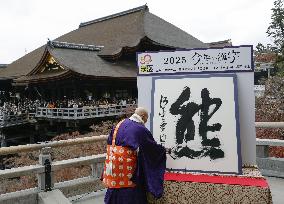
Seihan Mori, chief Buddhist priest of Kiyomizu temple in Kyoto, writes the kanji character "kuma," meaning bear, with a calligraphy brush during the annual kanji-of-the-year event on Dec. 12, 2025. The character was chosen to symbolize the national mood for the year due to frequent bear sightings and related incidents across Japan, as well as attention to the return of pandas - written with characters meaning "bear" and "cat" - to China.

  •  
Kanji for "bear" chosen as best to characterize 2025

Kanji for "bear" chosen as best to characterize 2025

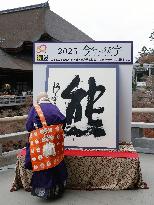
Seihan Mori, chief Buddhist priest of Kiyomizu temple in Kyoto, writes the kanji character "kuma," meaning bear, with a calligraphy brush during the annual kanji-of-the-year event on Dec. 12, 2025. The character was chosen to symbolize the national mood for the year due to frequent bear sightings and related incidents across Japan, as well as attention to the return of pandas - written with characters meaning "bear" and "cat" - to China.

  •  
Kanji for "bear" chosen as best to characterize 2025

Kanji for "bear" chosen as best to characterize 2025

Seihan Mori, chief Buddhist priest of Kiyomizu temple in Kyoto, writes the kanji character "kuma," meaning bear, with a calligraphy brush during the annual kanji-of-the-year event on Dec. 12, 2025. The character was chosen to symbolize the national mood for the year due to frequent bear sightings and related incidents across Japan, as well as attention to the return of pandas - written with characters meaning "bear" and "cat" - to China.

  •  

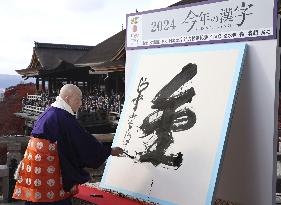
Kanji for "kin," meaning gold or money, chosen as best to characterize 2024

KYOTO, Japan, Dec. 12 Kyodo - Seihan Mori, chief Buddhist priest of Kiyomizu temple in Kyoto, writes the kanji character "kin," meaning gold or money, with a calligraphy brush on Dec. 12, 2024. The character was selected as the best single kanji to symbolize the national mood for the year as Japanese athletes had their second-best ever performance at the Olympics with 20 gold medals in Paris, while a money scandal rocked the ruling Liberal Democratic Party. (Kyodo)

  •  
Kanji for "kin," meaning gold or money, chosen as best to characterize 2024

Kanji for "kin," meaning gold or money, chosen as best to characterize 2024

Seihan Mori, chief Buddhist priest of Kiyomizu temple in Kyoto, writes the kanji character "kin," meaning gold or money, with a calligraphy brush on Dec. 12, 2024. The character was selected as the best single kanji to symbolize the national mood for the year as Japanese athletes had their second-best ever performance at the Olympics with 20 gold medals in Paris, while a money scandal rocked the ruling Liberal Democratic Party.

  •  

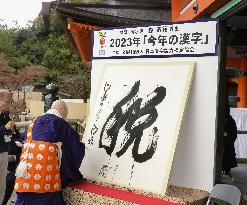
Kanji for "tax" chosen to symbolize Japan's social mood in 2023

KYOTO, Japan Kyodo - Seihan Mori, chief Buddhist priest of Kiyomizu temple in Kyoto, writes the kanji character "zei," meaning tax, with a calligraphy brush on Dec. 12, 2023. The character was selected as the best single kanji to symbolize the national mood for the year as tax-related issues hit headlines, including the government's temporary income tax cut of 40,000 yen per person planned next fiscal year. (Kyodo)

  •  
Kanji for "tax" chosen to symbolize Japan's social mood in 2023

Kanji for "tax" chosen to symbolize Japan's social mood in 2023

Seihan Mori, chief Buddhist priest of Kiyomizu temple in Kyoto, writes the kanji character "zei," meaning tax, with a calligraphy brush on Dec. 12, 2023. The character was selected as the best single kanji to symbolize the national mood for the year as tax-related issues hit headlines, including the government's temporary income tax cut of 40,000 yen per person planned next fiscal year.

  •  
Fujii joins Habu as only player in shogi history with 7 titles

Fujii joins Habu as only player in shogi history with 7 titles

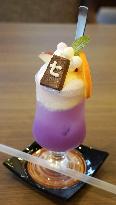
Photo taken on June 2, 2023, in the Aichi Prefecture city of Seto, the hometown of shogi player Sota Fujii, shows a soda float with the kanji character for "seven" on it served to celebrate his securing of the Meijin title, shogi's most prestigious and oldest, the previous day in a best-of-seven series in Takayama, Nagano Prefecture. The 20-year-old became the second player in the board game's history to hold seven titles simultaneously, after Yoshiharu Habu in 1996, and also became the youngest Meijin title holder, breaking the previous record of 21 years and two months set by Koji Tanigawa in 1983.

  •  

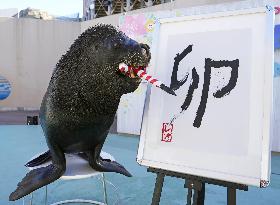
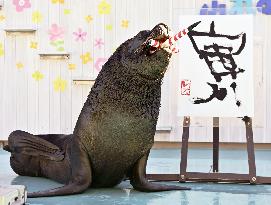
Sea lion writes kanji for new year

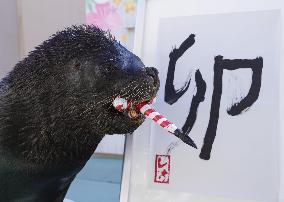
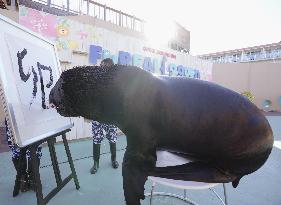
A South American sea lion writes the kanji character meaning "rabbit" at Yokohama Hakkeijima Sea Paradise in Yokohama, near Tokyo, on Dec. 26, 2022, ahead of the 2023 Year of the Rabbit in the Chinese zodiac.

  •  
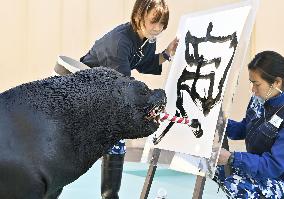
Sea lion writes kanji for new year

Sea lion writes kanji for new year

A South American sea lion writes the kanji character meaning "rabbit" at Yokohama Hakkeijima Sea Paradise in Yokohama, near Tokyo, on Dec. 26, 2022, ahead of the 2023 Year of the Rabbit in the Chinese zodiac.

  •  
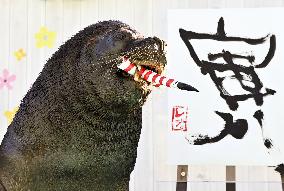
Sea lion writes kanji for new year

Sea lion writes kanji for new year

A South American sea lion writes the kanji character meaning "rabbit" at Yokohama Hakkeijima Sea Paradise in Yokohama, near Tokyo, on Dec. 26, 2022, ahead of the 2023 Year of the Rabbit in the Chinese zodiac.

  •  
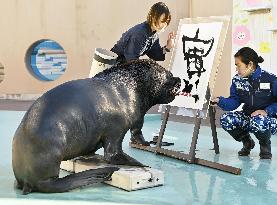
Sea lion writes kanji for new year

Sea lion writes kanji for new year

A South American sea lion writes the kanji character meaning "rabbit" at Yokohama Hakkeijima Sea Paradise in Yokohama, near Tokyo, on Dec. 26, 2022, ahead of the 2023 Year of the Rabbit in the Chinese zodiac.

  •  
Kanji characterizing 2013

Kanji characterizing 2013

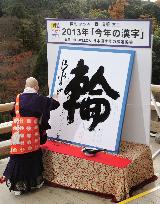
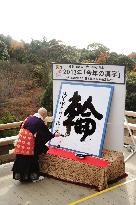
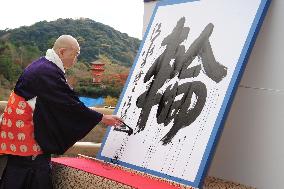
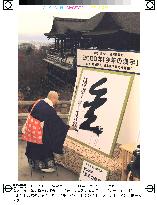
KYOTO, Japan - Photo shows the kanji "wa," meaning ring, which chief Buddhist priest Seihan Mori has written at Kiyomizu Temple in Kyoto on Dec. 12, 2013. "Wa" was chosen as the Chinese character best symbolizing 2013's national ethos in Japan.

  •  
Kanji characterizing 2013

Kanji characterizing 2013

KYOTO, Japan - Photo shows chief Buddhist priest Seihan Mori and the kanji "wa," meaning ring, he has written at Kiyomizu Temple in Kyoto on Dec. 12, 2013. "Wa" was chosen as the Chinese character best symbolizing 2013's national ethos in Japan.

  •  
Kanji characterizing 2013

Kanji characterizing 2013

KYOTO, Japan - Photo shows chief Buddhist priest Seihan Mori and the kanji "wa," meaning ring, he has written at Kiyomizu Temple in Kyoto on Dec. 12, 2013. "Wa" was chosen as the Chinese character best symbolizing 2013's national ethos in Japan.

  •  
Kanji museum opens in Kyoto

Kanji museum opens in Kyoto

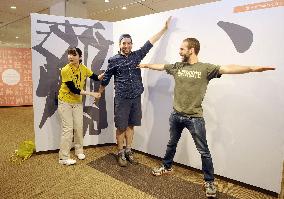
KYOTO, Japan, June 29 Kyodo - Photo taken in the western Japan city of Kyoto shows tourists making the kanji character "fuku," meaning "to hide" in Japanese, at the Japan Kanji Museum & Library on June 29, 2016, the day of its opening. The museum, launched by the Japan Kanji Aptitude Testing Foundation, allows visitors to deepen their knowledge about the shape, sound and meaning of each Chinese character through interactive exhibitions.

  •  
Top 3 'lucky man' race finishers hold up character, pictures

Top 3 'lucky man' race finishers hold up character, pictures

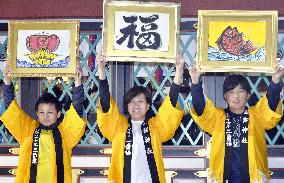
OSAKA, Japan - The top three finishers of an annual race to pick a "Fuku-otoko" (lucky man) raise a framed Chinese kanji character and paintings, all suggesting luck, at Nishinomiya Shrine in Nishinomiya, Hyogo Prefecture, western Japan, on Jan. 10, 2015. From R: runner-up Yuya Koike, winner Tomonori Shiwa and third-place Koki Ishida.

  •  
Winner of 'lucky man race' at Shinto shrine in west Japan

Winner of 'lucky man race' at Shinto shrine in west Japan

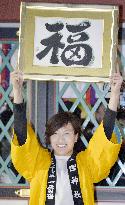
OSAKA, Japan - Tomonori Shiwa raises the Chinese kanji character "fuku" or luck in a frame as the winner of an annual race to pick a "Fuku-otoko" (lucky man) at Nishinomiya Shrine in Nishinomiya, Hyogo Prefecture, western Japan, on Jan. 10, 2015. He reached the main hall of the Shinto shrine ahead of other participants to be crowned the year's lucky man.

  •  
'Kanji' meaning tax picked as best characterizing 2014

'Kanji' meaning tax picked as best characterizing 2014

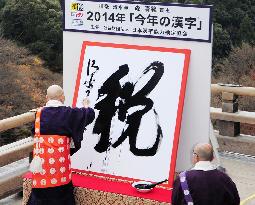
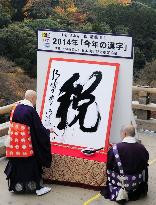
KYOTO, Japan - Seihan Mori (L), the chief priest of Kiyomizu Temple in Kyoto, writes the "kanji" character "zei" meaning tax on a large sheet of "washi" paper on Dec. 12, 2014, at the announcement by the Japan Kanji Aptitude Testing Foundation of the single best kanji symbolizing the year 2014 in Japan.

  •  
'Kanji' meaning tax picked as best characterizing 2014

'Kanji' meaning tax picked as best characterizing 2014

KYOTO, Japan - Seihan Mori (L), the chief priest of Kiyomizu Temple in Kyoto, writes the "kanji" character "zei" meaning tax on a large sheet of "washi" paper on Dec. 12, 2014, at the announcement by the Japan Kanji Aptitude Testing Foundation of the single best kanji symbolizing the year 2014 in Japan.

  •  
Kanji of year in 2 decades exhibited in Kyoto

Kanji of year in 2 decades exhibited in Kyoto

KYOTO, Japan - The Japan Kanji Aptitude Testing Foundation starts an exhibition of the "kanji" Japanese character representing social conditions of each year from 1995 to 2013 at Kiyomizu-dera, a Buddhist temple in Kyoto, on Dec. 1, 2014. This year's kanji will be added after its announcement on Dec. 12.

  •  
Kanji for 'kizuna' formed with candle lanterns

Kanji for 'kizuna' formed with candle lanterns

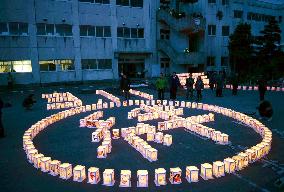
NATORI, Japan - The "kanji" character for "kizuna," or bond, is formed using candle lanterns at Yuriage Junior High School in Natori, Miyagi Prefecture on March 11, 2014, the third anniversary of the earthquake and tsunami disaster.

  •  
Kanji characterizing 2013

Kanji characterizing 2013

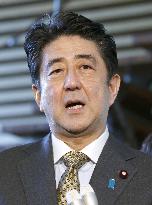
TOKYO, Japan - Prime Minister Shinzo Abe answers reporters' questions at the prime minister's office in Tokyo on Dec. 12, 2013. While "wa" was chosen as the Chinese character best symbolizing 2013's national ethos in Japan, Abe said he chose "yume" meaning dream as the year's kanji, as Tokyo won its bid in September to host the 2020 Olympic Games.

  •  
Calligraphy expressing hope for reconstruction

Calligraphy expressing hope for reconstruction

TOKYO, Japan - Hisaki Miyadate (R), vice governor of Iwate Prefecture, which was hit by the March 11 quake-tsunami disaster, holds a calligraphy work of Seihan Mori, chief priest of Kiyomizudera temple in Kyoto, at the Iwate prefectural government office in Morioka on Nov. 8, 2011. The Japanese kanji character for ''kizuna'' (bond) represented in the work was chosen by the Buddhist priest as an expression of hope for reconstruction from the disaster.

  •  
'Hot' chosen as kanji of the year

'Hot' chosen as kanji of the year

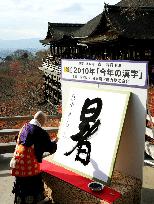
KYOTO, Japan - Seihan Mori, chief priest of Kiyomizu temple, writes the kanji character ''sho,'' meaning hot, during an annual calligraphy ceremony to unveil the Chinese character of the year at the temple in Kyoto on Dec. 10, 2010. The kanji character was voted as best characterizing Japan, which experienced a record-hot summer.

  •  
Kanji meaning 'open' said to characterize Japan

Kanji meaning 'open' said to characterize Japan

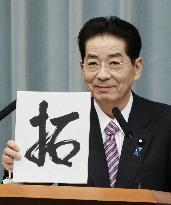
TOKYO, Japan - Chief Cabinet Secretary Yoshito Sengoku holds a sign showing the kanji character meaning ''opening up'' or ''leading the way'' as best characterizing Japan in the year 2010 during a press conference in Tokyo on Dec. 10, 2010.

  •  
Kanji meaning 'new' picked to best characterize year 2009

Kanji meaning 'new' picked to best characterize year 2009

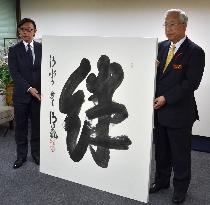
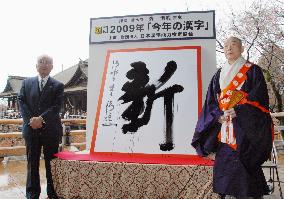
KYOTO, Japan - Seihan Mori (R), chief priest of Kiyomizu temple in Kyoto, and Akio Kioi, head of the Japan Kanji Aptitude Testing Foundation, pose for photos after Mori wrote the character ''shin'' on a large piece of ''washi'' Japanese paper on Dec. 11, 2009. The character, which means ''new'' in English, has been chosen as the single best kanji to symbolize the year 2009.

  •  
Kanji meaning 'new' picked to best characterize year 2009

Kanji meaning 'new' picked to best characterize year 2009

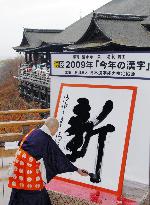
KYOTO, Japan - Seihan Mori, chief priest of Kiyomizu temple in Kyoto, writes the character ''shin,'' which means ''new'' in English, with a dash of a calligraphy brush on a large piece of ''washi'' Japanese paper on Dec. 11, 2009. The character has been chosen as the single best kanji to symbolize the year 2009.

  •  
Obama-inspired kanji chosen as best characterizing 2008

Obama-inspired kanji chosen as best characterizing 2008

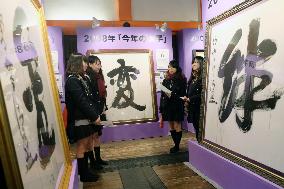
KYOTO, Japan - Seihan Mori, head of Kiyomizu-dera temple in Kyoto, writes the character ''hen,'' which means ''change'' in English, on Dec. 12 as the character has been chosen as the single best kanji to characterize the year 2008.

  •  
'Nise' (fake) chosen as kanji character of 2007

'Nise' (fake) chosen as kanji character of 2007

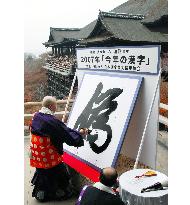
KYOTO, Japan - Seihan Mori, chief priest at Kiyomizu Temple in Kyoto, writes the Chinese character, or kanji, for ''nise'' (fake) on a board at the temple on Dec. 12. The character was chosen as the kanji symbol of 2007, reflecting a series of false food labeling scandals as well as problems over political funds and faulty pension records, the Japan Kanji Aptitude Testing Foundation said.

  •  
'Inochi (life)' chosen for character of the year

'Inochi (life)' chosen for character of the year

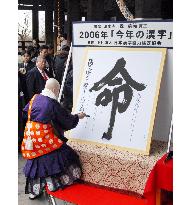
KYOTO, Japan - Seihan Mori, chief priest at Kiyomizu Temple in Kyoto, writes the Chinese character, or kanji, for ''Inochi (life)'' on a board at the temple on Dec. 12. The character was chosen as the kanji symbol of this year marked by the birth of the first grandson for the emperor, a series of reported student suicides after being bullied, and a number of child abuses, the Japan Kanji Aptitude Testing Foundation said.

  •  
'Love' chosen as term best representing 2005

'Love' chosen as term best representing 2005

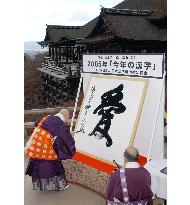
KYOTO, Japan - Seihan Mori, chief priest at Kiyomizu Temple in Kyoto, writes the Chinese character, or kanji, for ''love'' on a board at the temple on Dec. 12. The character was chosen as the kanji symbol of this year in an annual poll conducted by a Kyoto-based association.

  •  
'Tiger' chosen as kanji character of yr

'Tiger' chosen as kanji character of yr

KYOTO, Japan - Seihan Mori, chief priest of Kiyomizudera Temple in Kyoto, paints the Chinese character, or kanji, for ''tiger,'' at the temple on Dec. 12. The character was chosen as the kanji symbol of the year in an annual poll conducted by a Kyoto-based association. It was chosen because the Central League baseball club Hanshin Tigers has bolstered public sentiment by winning the league pennant for the first time in 18 years.

  •  
'Return' chosen as kanji character of year

'Return' chosen as kanji character of year

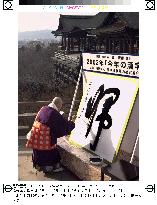
KYOTO, Japan - Chief priest Seihan Mori of the Kiyomizudera Temple in Kyoto brush-paints the Chinese character, or kanji, for ''return,'' at the temple Dec. 12. The character was chosen as the kanji symbolic of the past year in an annual popular poll promoted by a Kyoto-based association. It was chosen partly because the year saw the Japanese economy returning to its level prior to the bubble economy and five Japanese abducted to North Korea in the late 1970s returning to Japan.

  •  
'Sen' chosen as kanji of the year

'Sen' chosen as kanji of the year

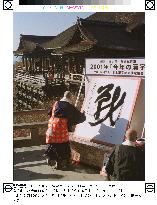
KYOTO, Japan - Seihan Mori, head priest of Kiyomizudera Temple in Kyoto, writes the Chinese character 'sen' (meaning fight or war), which was chosen Dec. 12 as the 'Kanji of the Year' in an annual poll sponsored by the Japan Kanji Competence Examination Association. The calligraphy is dedicated to the temple, pictured in the background, to be kept there for a year.

  •  
'Kin' chosen as kanji of the year

'Kin' chosen as kanji of the year

KYOTO, Japan - Seihan Mori, head priest of Kiyomizudera Temple in Kyoto, writes the Chinese character 'kin' (meaning gold or money), which was chosen Dec. 12 as the 'Kanji of the Year' in an annual poll sponsored by the Japan Kanji Competence Examination Association. The calligraphy is dedicated to the temple, pictured in the background, to be kept there for a year.

  •  
Kanji meaning progress best represents 2022 for Japan PM

Kanji meaning progress best represents 2022 for Japan PM

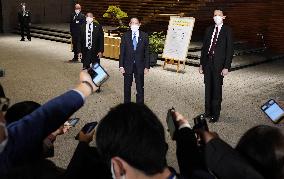
Japanese Prime Minister Fumio Kishida speaks to reporters at his office in Tokyo on Dec. 12, 2022. Kishida said the kanji character for "shin," meaning progress, best represents the year 2022 given the advancement seen under his government in a host of challenges that faced Japan. ==Kyodo

  •  
Kanji meaning progress best represents 2022 for Japan PM

Kanji meaning progress best represents 2022 for Japan PM

Japanese Prime Minister Fumio Kishida speaks to reporters at his office in Tokyo on Dec. 12, 2022. Kishida said the kanji character for "shin," meaning progress, best represents the year 2022 given the advancement seen under his government in a host of challenges that faced Japan.

  •  
Kanji for "war" chosen as best to characterize 2022

Kanji for "war" chosen as best to characterize 2022

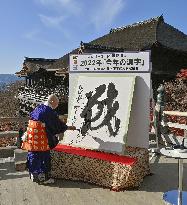
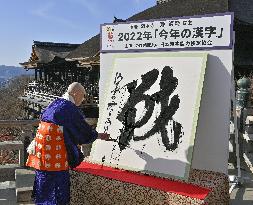
Seihan Mori, chief Buddhist priest of Kiyomizu temple in Kyoto, writes the kanji character "sen," meaning war or battle, with a calligraphy brush on Dec. 12, 2022. The character was selected as the best single kanji to symbolize the national mood for the year, referencing the Russia-Ukraine war.

  •  
Kanji for "war" chosen as best to characterize 2022

Kanji for "war" chosen as best to characterize 2022

Seihan Mori, chief Buddhist priest of Kiyomizu temple in Kyoto, writes the kanji character "sen," meaning war or battle, with a calligraphy brush on Dec. 12, 2022. The character was selected as the best single kanji to symbolize the national mood for the year, referencing the Russia-Ukraine war.

  •  
Writing practice for new year

Writing practice for new year

A South American sea lion practices writing the kanji character meaning "tiger" at Yokohama Hakkeijima Sea Paradise in Yokohama, Japan, on Dec. 27, 2021, ahead of the 2022 Year of the Tiger in the Chinese zodiac.

  •  
Writing practice for new year

Writing practice for new year

A South American sea lion practices writing the kanji character meaning "tiger" at Yokohama Hakkeijima Sea Paradise in Yokohama, Japan, on Dec. 27, 2021, ahead of the 2022 Year of the Tiger in the Chinese zodiac.

  •  
Writing practice for new year

Writing practice for new year

A South American sea lion practices writing the kanji character meaning "tiger" at Yokohama Hakkeijima Sea Paradise in Yokohama, Japan, on Dec. 27, 2021, ahead of the 2022 Year of the Tiger in the Chinese zodiac.

  •  
Writing practice for new year

Writing practice for new year

A South American sea lion practices writing the kanji character meaning "tiger" at Yokohama Hakkeijima Sea Paradise in Yokohama, Japan, on Dec. 27, 2021, ahead of the 2022 Year of the Tiger in the Chinese zodiac.

  •  
Kanji meaning "gold" picked to symbolize Japan's social mood in 2021

Kanji meaning "gold" picked to symbolize Japan's social mood in 2021

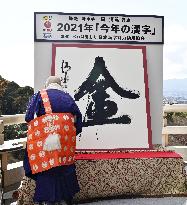
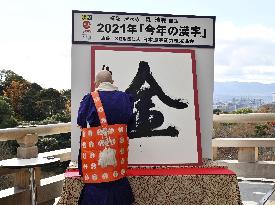
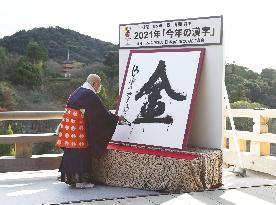
Seihan Mori, chief Buddhist priest of Kiyomizu temple, writes the kanji character "kin" meaning gold on Dec. 13, 2021, at the temple in Kyoto after it was picked as the single most representative Chinese character corresponding to the social mood of the Olympic year in Japan. (Pool photo)

  •  
Kanji meaning "gold" picked to symbolize Japan's social mood in 2021

Kanji meaning "gold" picked to symbolize Japan's social mood in 2021

Seihan Mori, chief Buddhist priest of Kiyomizu temple, writes the kanji character "kin" meaning gold on Dec. 13, 2021, at the temple in Kyoto after it was picked as the single most representative Chinese character corresponding to the social mood of the Olympic year in Japan. (Pool photo)

  •  
Kanji meaning "gold" picked to symbolize Japan's social mood in 2021

Kanji meaning "gold" picked to symbolize Japan's social mood in 2021

Seihan Mori, chief Buddhist priest of Kiyomizu temple, writes the kanji character "kin" meaning gold on Dec. 13, 2021, at the temple in Kyoto after it was picked as the single most representative Chinese character corresponding to the social mood of the Olympic year in Japan. (Pool photo)

  • Main
  • Top
  • Editorial
  • Creative
  • About Us
  • About ILG
  • Terms of use
  • Company
  • BEHIND
  • Price List
  • Single Plan
  • Monthly Plan
  • Services
  • Shooting
  • Rights Clearance
  • Support
  • FAQ
  • How To Buy
  • Contact Us
  • Become a Partner

© KYODO NEWS IMAGES INC

All Rights Reserved.

  • Editorial
  • Olympics
  • News
  • Sports
  • Japan
  • Tech
  • Royal
  • Disaster
  • NorthKorea
  • Old Japan
  • SNS
  • Creative
  • Food
  • Japan
  • Landscape
  • Animal
  • Popular
  • #Ukraine
  • #Russia
  • #coronavirus
  • #N. Korea
  • #China
  • #Thailand
  • #Ukraine
  • #Russia
  • #coronavirus
  • #N. Korea
  • #China
  • #Thailand
  • Food
  • Japan
  • Landscape
  • Animal
  • Olympics
  • News
  • Sports
  • Japan
  • Tech
  • Royal
  • Disaster
  • NorthKorea
  • Old Japan
  • SNS